
Identity infrastructure for the cookie-less internet
TrafficCatch restores pseudonymous visitor identity when cookies fail, helping websites recover attribution, analytics, session intelligence, funnels, and fraud detection.

The web is losing its measurement layer
Cookies are weakening. Browser privacy controls are increasing. Returning visitors often appear as disconnected sessions, so teams lose confidence in attribution and traffic quality.
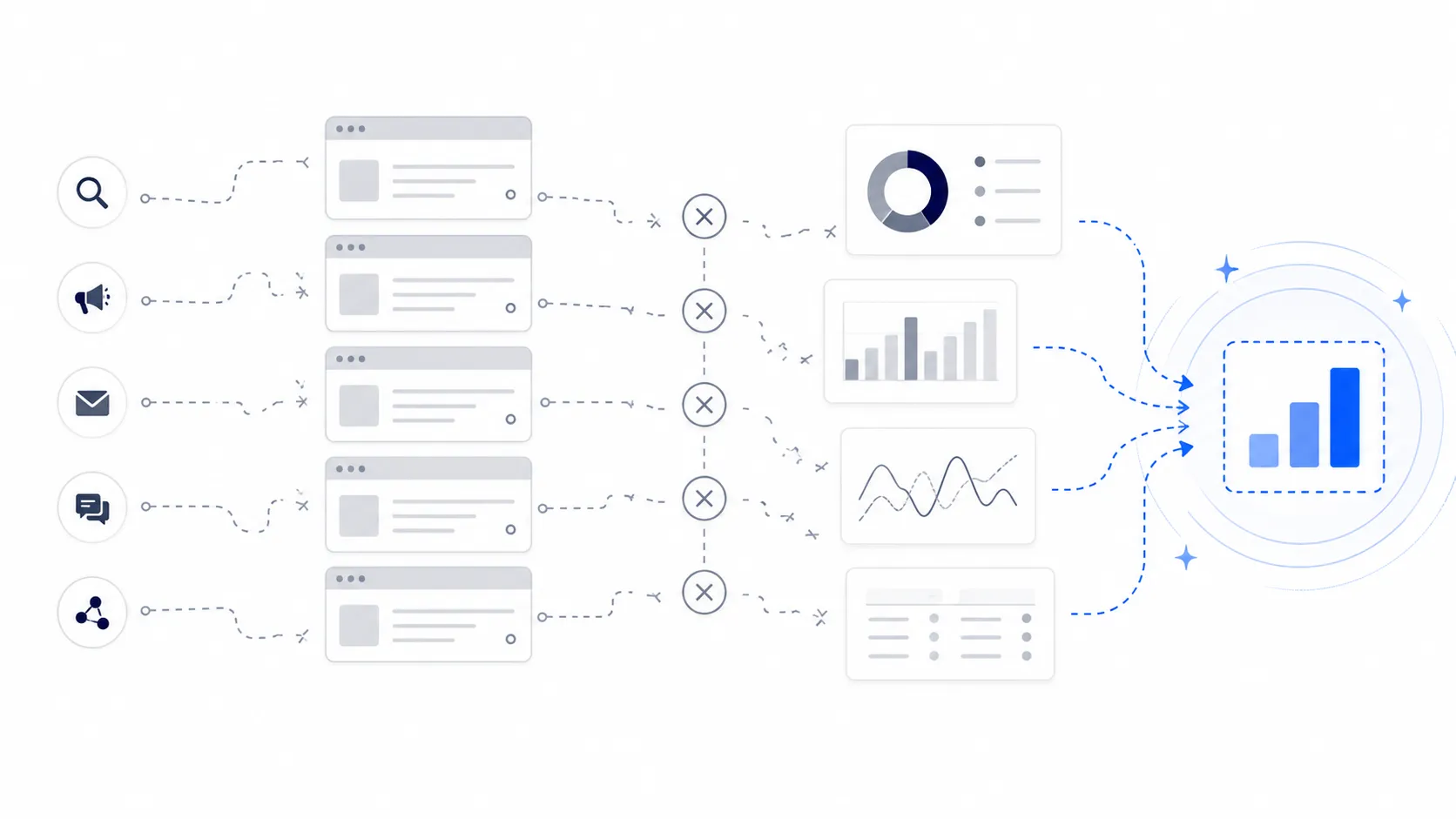
Businesses are becoming blind to their own traffic
Traditional analytics is still useful, but it becomes weaker when the same visitor keeps appearing as unrelated sessions.
Cookie loss
Returning visitors can become hard to recognize.
Attribution gaps
Source and conversion paths become fragmented.
Weak funnels
Drop-off data becomes less reliable when sessions split.
Isolated replays
Recordings lose context without visitor history.
Fraud blind spots
Low-quality traffic is harder to connect across behavior.
Analytics is not the real problem. Identity is.
When a website can recognize a pseudonymous device across visits, attribution becomes clearer, session replay gains context, funnels become more useful, and fraud signals connect to real journeys.
Traditional analytics sees
TrafficCatch sees
TrafficCatch creates a pseudonymous identity layer for websites
A website installs the TrafficCatch script. Anonymous device and browser signals are collected, normalized, hashed, and matched server-side. Visits, events, recordings, funnels, and fraud signals then attach to a TCID.
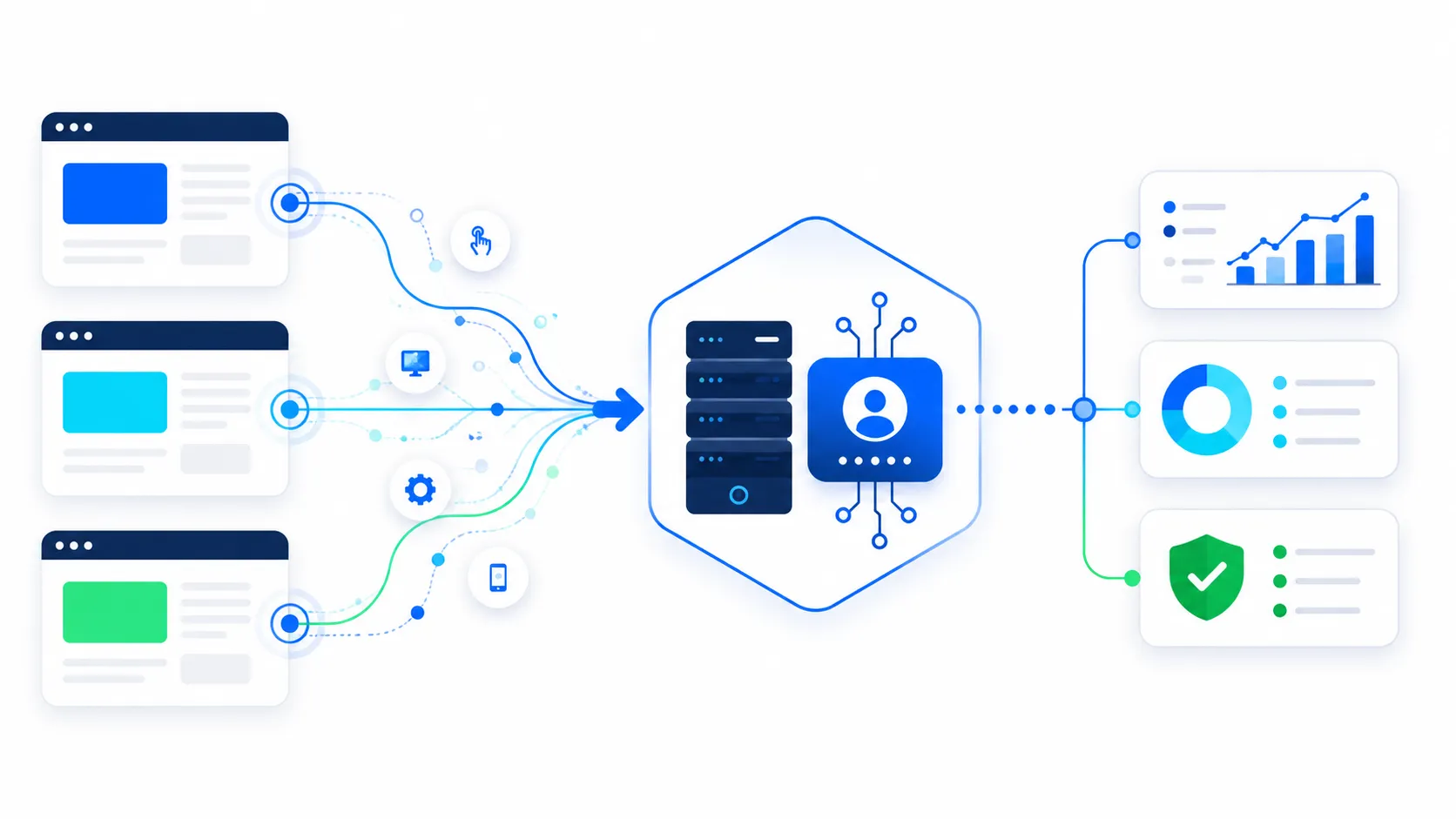
Install script
Customer adds a first-party TrafficCatch script to the website.
Collect signals
Device, browser, network, and timing signals are captured.
Process server-side
Signals are normalized, hashed, and compared safely.
Create TCID
The identity engine creates or matches a pseudonymous profile.
Power analytics
Dashboards, events, funnels, replays, and fraud scores connect.
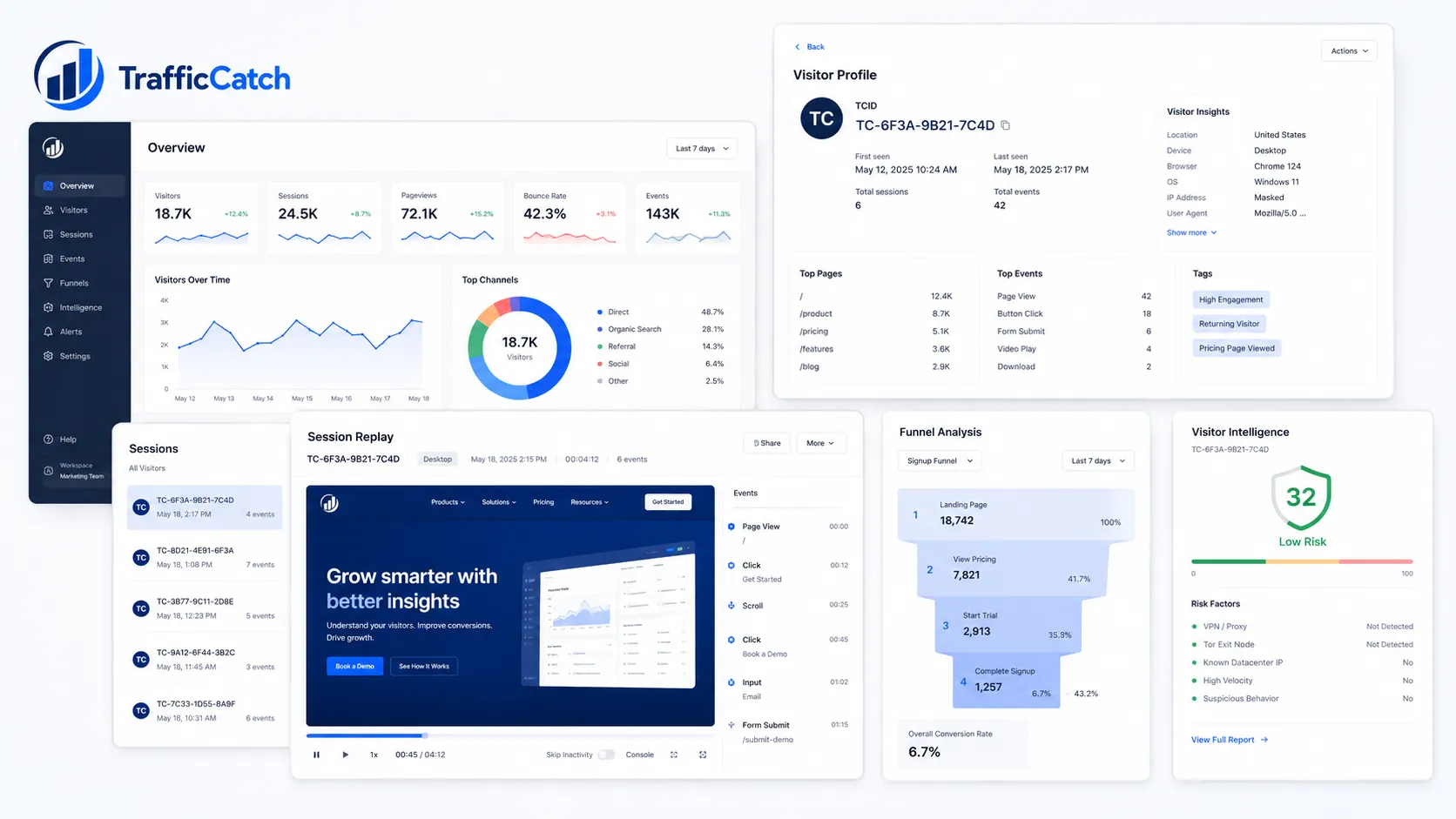
Built product, not just a concept
TrafficCatch includes the core modules needed to prove the identity layer across analytics, visitors, recordings, events, funnels, sites, and fraud signals.
Dashboard analytics
KPIs, traffic overview, sources, pages, and device metrics.
Visitor intelligence
TCID profiles with device, source, timeline, and site history.
Session replay
Recordings connected to the same visitor journey.
Fraud scoring
Trusted, suspect, and fraud bands for traffic quality.
Install once, start seeing pseudonymous journeys
TrafficCatch is designed around a simple first-party setup. The tracking script creates the bridge between website activity and the identity engine.

Turn anonymous visits into measurable journeys
TrafficCatch connects activity to a pseudonymous TCID, so teams can understand device type, browser, OS, location, source, site history, visit timeline, pageviews, and quality signals.

Replay behavior, track events, and understand funnels
The identity layer makes product analytics more useful because events, recordings, funnel steps, and conversion goals connect to one pseudonymous journey.

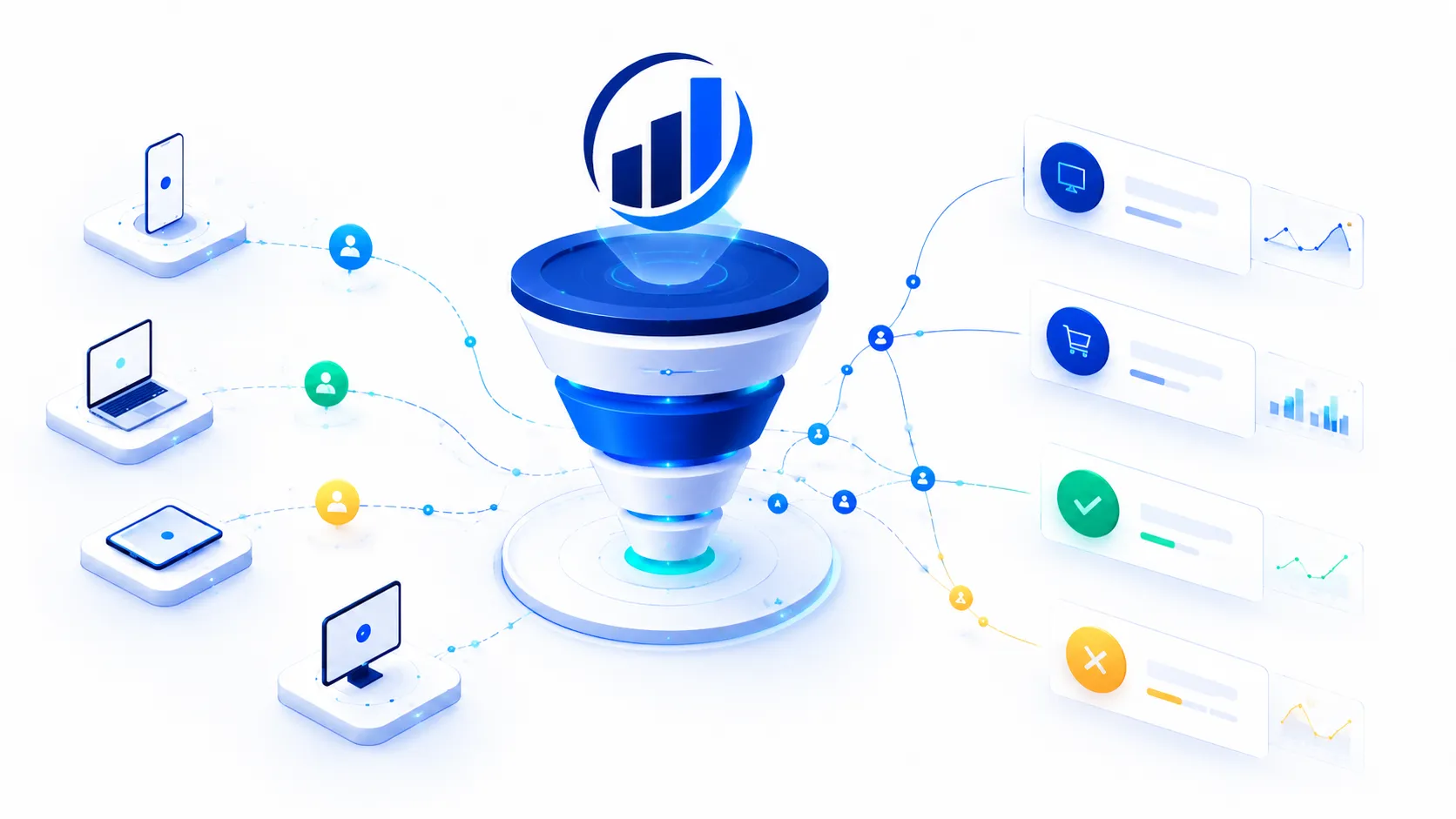
Session replay
Replay behavior with identity context.
Custom events
Track high-value actions like demo requests and purchases.
Funnels
See steps, drop-off, and conversion rate.
Goals
Connect completed actions back to visitor journeys.

One identity layer can connect signals across connected sites
TrafficCatch is designed for teams managing multiple websites, campaigns, and traffic sources. Where deployment and customer controls allow, a TCID can help show site history, returning behavior, and shared visitor context across connected properties.
Understand traffic quality, not only traffic quantity
TrafficCatch helps teams separate trusted activity from suspicious and fraudulent patterns using fraud scores, filters, and visitor-level quality context.

Separate trusted visitors from suspicious traffic
TrafficCatch adds a traffic quality layer on top of analytics. Fraud scoring helps teams review trusted, suspect, and high-risk patterns instead of judging performance from visit volume alone.

One identity layer powers multiple products
Attribution recovery
Reconnect source context across visits.
Returning visitors
Recognize pseudonymous repeat behavior.
Funnel analysis
Connect conversion steps to visitor journeys.
Event tracking
Attach actions to TCID history.
Session replay
Understand behavior with profile context.
Fraud intelligence
Evaluate the quality of traffic sources.
Multi-site intelligence
View site history where deployment allows.
Intelligent links
Future distribution layer for identity signals.

Designed for pseudonymous intelligence
TrafficCatch should be positioned carefully: pseudonymous device intelligence with privacy controls, not named person identification. Customers stay responsible for jurisdiction-specific consent and policy requirements.
Hashed signals
Signal processing reduces raw exposure.
Pseudonymous TCID
Device-level profile, not a named human by default.
Input masking
Session recording privacy controls matter.
Retention controls
Data lifecycle should be customer-controlled.
Frequently Asked Questions
What is pseudonymous identity?
Pseudonymous identity assigns a unique identifier (TCID) to a device or browser based on complex signals without tying it to personally identifiable information (PII) like a name or email address.
How does TrafficCatch work without cookies?
When third-party cookies are blocked, TrafficCatch relies on a clean, asynchronous first-party script that gathers browser, device, and network signals. These signals are securely hashed server-side to resolve identity.
Is server-side hashing privacy compliant?
Yes, TrafficCatch is designed with privacy controls. Signal processing hashes data server-side to reduce raw exposure, giving website owners control over data retention and compliance with local privacy laws.
Ready to see TrafficCatch in action?
See how TrafficCatch turns disconnected anonymous visits into one measurable pseudonymous device journey across analytics, events, funnels, recordings, and fraud intelligence.